
Manfred Steyer
Consultant and Author, softwarearchitekt.at | Austria
Talk
Angular's Future Without NgModules: Architectures with Standalone Components
This question is answered here. After showing the basics and mental model of standalone components (pipes and directives), you will see several approaches for structuring your application and for grouping related building blocks. We also go into edge cases for lazy loading and the use of existing libraries based on NgModules. We discuss the interaction with tree-shakeable providers and how you can convert existing solutions step-by-step into standalone components.
By the end you know, how to improve your architectures with standalone components.
About Manfred Steyer
Workshop
Modern Angular Architectures: Standalone Components, Nx and more
Manfred Steyer & Michael Egger-Zikes
Wow, what a journey. This year, Angular already turns 6 years old. Of course, during these years it evolved a lot. Hence, it’s time to have a closer look to recently added modern features that allow for more modern, fresh, and lightweight architectures.
In this interactive workshop, we start with investigating the brand-new Standalone Components and migrate an existing Angular-Application to this innovation. We show how they work together with a professional Nx Workspace and Module Federation for building Micro Frontends and dramatically speeding up the build process.
Also, we discuss the new typed Forms and add it to our case study as well. Then, we develop some Nx Generators and Schematics for the Angular CLI allowing us to automate repeating and boring tasks related to the implementation of our architecture.
Furthermore, we introduce the NGRX Component Store as well as some advanced NGRX-Patterns. By the end you have a case study that shows how a modern Angular application can look like.
Technical Prerequisites for the Workshop:
a) Node.js installed
- LTS version or higher
- https://nodejs.org
b) Angular CLI
- npm install -g @angular/cli@latest
c) Test with “npm -v” and “ng v” from the command line whether npm and then Angular CLI work
d) Nx CLI
- npm install -g nx@latest
e) A modern browser like the current Chrome version
f) An IDE with Angular support like Visual Studio Code (free) or WebStorm/IntelliJ (commercial)
g) Optionally install git
- https://git-scm.com
- To clone the repo that I will provide at the begin of the workshop
- Alternatively the ZIP file download would work as well
h) We will use the following internet resources, so they need to be accessible for everyone:
- ANGULARarchitects.io (http://angulararchitects.io)
- npm Registry (https://registry.npmjs.org)
- GitHub (https://github.com)
Books

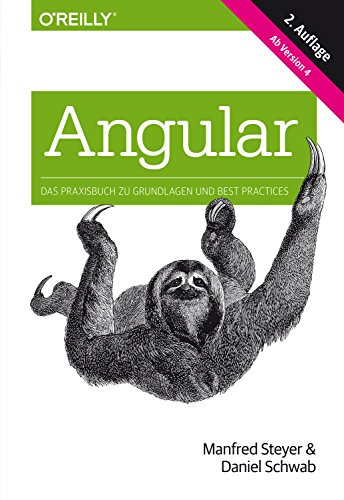
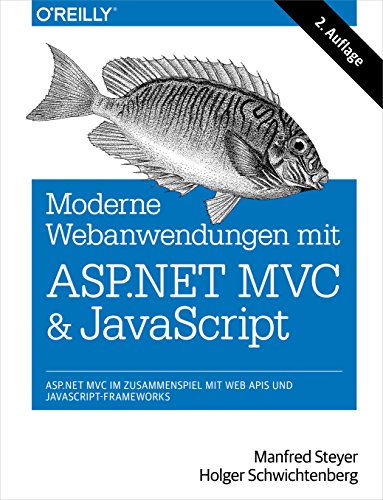
Manfred Steyer in action
Learn from the Best Featured Speakers

Minko Gechev
Angular team, Google | USA

Emma Twersky
Angular team, Google | USA

Alex Rickabaugh
Angular team, Google | USA

Kara Erickson
TLM of Aurora team, Google | USA

Alex Okrushko
Principal UI Architect, Cisco | Canada
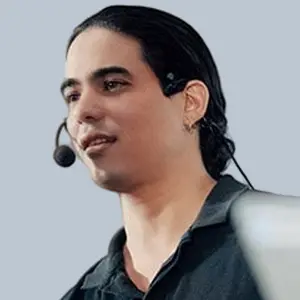
Nir Kaufman
Front End Guild Manager, Next Insurance | Israel
Manfred Steyer
Consultant and Author, softwarearchitekt.at | Austria

Michael Hladky
Trainer and consultant, push-based.io | Austria

Gerard Sans
Developer Evangelist for Web and Cloud, UK

Dawid Kędzierski
Tech Lead, Vizlib & Astrato | Poland

Alisa Duncan
Senior Developer Advocate, Okta | USA

Mateusz Do Duc
Senior Angular Developer, House of Angular | Poland

Jakub Bartusiak
Lead FE Developer, BNY Mellon | EaaS Poland Team | Poland

Shai Reznik
Founder, HiRez.io | Israel

Eliran Eliassy
Founder & Developer, e-square.io | Israel

Greg Radzio
Principal Angular Engineer, Lowgular | Poland

Julian Jandl
Lead Performance Engineer, Trainer & Consultant, push-based.io | Austria

Deborah Kurata
GDE, MVP, Software Developer, Pluralsight Author | USA
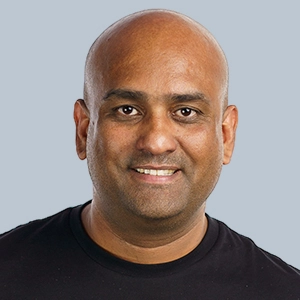
Dhananjay Kumar
Teacher and Consultant, ngIndia | India

Krzysztof Platis
Tech Lead, SAP Spartacus core team & Divante | Poland

Kamil Gałek
Senior Frontend Developer, BigPicture | Poland

Maciej Czerwiakowski
Independent IT consultant @7N, owner of 13DSGN.COM, Poland

Michael Egger-Zikes
Trainer & Consultant, ANGULARarchitects.io | Austria


Companies that support our community
Our Sponsors
By becoming a sponsor of ngPoland you will get an excellent opportunity to showcase your
company and products to
1000 most active European developers.
Such exposure will definitely help you to generate interest in your company, as well as allow
you
to find new business partners and potential employees.
To learn more about our sponsorship offer, please fill in the form.
Platinum Sponsor

Gold Sponsor

Gold Sponsor

Gold Sponsor

Gold Sponsor

Gold Sponsor

Silver Sponsor

Silver Sponsor

Silver Sponsor

Silver Sponsor

Special Sponsor

Special Sponsor

Special Sponsor

Join our mailing list
Sign up to receive updates about NG Poland, including workshops, speaker previews, ticket launches, NG Awards, Behind the Code Magazine, CFP details and other exclusive content. We won’t spam you and will only send you emails we genuinely think you’ll find interesting. You can unsubscribe at any time and you can find more information here.